Persistent Servers that Scale Instantly & Improve End Users Experience
Written in collaboration with
Afterthought LLC
Key Highlights
Edgegap's global edge deployment model dramatically reduced latency by dynamically placing servers at optimal edge locations for each session. Players who previously experienced high ping, desync, and inconsistent game quality now enjoy smooth, stable gameplay regardless of their geographic location.
Edgegap's platform eliminated the time-consuming manual work of managing server deployments, scaling, and region selection. The automated orchestration removed constant tuning requirements and operational risks, allowing the engineering team to focus on core gameplay and stability improvements instead of infrastructure management.
Edgegap's just-in-time, on-demand server deployment across 615+ locations worldwide automatically spins up servers exactly where and when they're needed. This intelligent scaling eliminates problems of underutilized or overloaded servers, ensuring capacity is always available while removing guesswork and wasted capacity.
The Studio
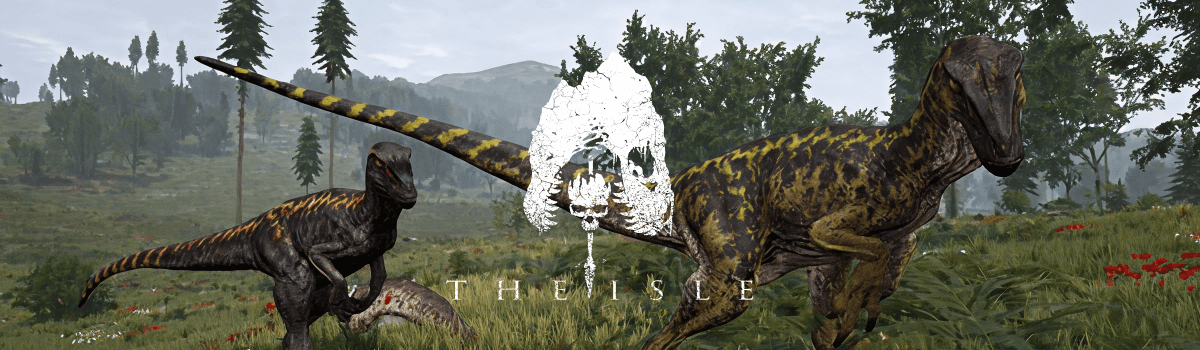
Afterthought LLC is an international team of dedicated game developers focused on creating and refining their open-world survival game The Isle. Players take on the role of a dinosaur or other creature, plunging into a brutal, persistent ecosystem on servers featuring up to 100+ players.
The Challenge
The Isle has a highly dedicated and global audience that has engaged with the game for nearly a decade. A player may not notice when a bullet doesn't hit when it should, but no one misses the head of a dinosaur biting through another player for nothing to happen. When you control a dinosaur the size of a building or that can move as fast as a vehicle, those types of issues become exponentially problematic.
The team was facing problems with varying regional server demands and degraded performance for players outside of those areas. Manual management of regional selection, scaling, and server deployment was time consuming and made it difficult to promptly spin up servers exactly where and when they were needed. The result was often overloaded or underutilized servers that were not meeting capacity demands.
Overall the process was draining both time and critical resources from game development towards infrastructure while having a financial impact that was not cost effective.
The Solution – Game Server Orchestration
Edgegap’s modern orchestration leverages the world’s first, and largest, edge network. It includes the ability to automatically deploy game servers to a regionless cloud network of 615+ locations worldwide, just-in-time and on-demand based on player traffic.
For games with persistent servers like The Isle, Edgegap also offers the ability to deploy to a fully managed “Private Fleet” of servers with custom hardware including Bare Metal and Virtual Machines (“VMs”).
This private pool of servers makes it easy and cost-effective to operate persistent servers for large-scale multiplayer games. and ensures low-latency performance to players. Edgegap’s platform and its support team helped The Isle through many key features that include:
Self-serve access to fully managed persistent servers with custom hardware locations worldwide removing Egress costs.
Automated orchestration and server management. Setup times for new servers was reduced to minutes, letting the team focus on development instead of infrastructure.
Enterprise-grade reliability alongside DDoS Protection.
Hot stand-by.
Monitoring, analytics, and proactive alerts.
Easy Integration & Seamless Migration: Edgegap offers simple and clear documentation, access to API references, alongside the tools and blueprint any Unreal engine project needs to integrate Edgegap’s game server orchestration.
Conclusion
The platform's automated scaling capabilities eliminated the time-consuming process of manual infrastructure management and ensured resources matched demand. Increased regional access enhanced players’ online experience by dynamically placing servers at the optimal edge location for each session and the simplification of infrastructure management allowed the team to redirect their focus towards the desired focus of core gameplay development.