VR Warfare at Scale: Triangle Factory Launches Forefront 1.0 on Edgegap
Written in collaboration with
Triangle Factory
Key Highlights
Triangle Factory ran Forefront on Edgegap through an initial 36-hour validation period, then fully migrated during Early Access. That foundation of trust culminated in the game's 1.0 launch running entirely on Edgegap starting April 2026.
CPU performance was central to the migration decision. After validating on Edgegap's compute-optimized servers, players noticed the difference without being told anything had changed
Triangle Factory needed infrastructure they could operate themselves. Edgegap's self-serve portal and responsive shared Slack support meant the team spent time on the game, not the backend.
Edgegap's regionless network and usage-based pricing gave Triangle Factory consistent performance worldwide without billing surprises.
Forefront is one of three Triangle Factory titles running on Edgegap. Read how the studio also migrated Breachers and Hyper Dash, each with its own infrastructure challenges and solutions.
The Studio
Triangle Factory is a Belgium-based VR game studio specializing in competitive and social multiplayer experiences. They are best known for Breachers, a tactical 5v5 VR shooter, and Hyper Dash, a free-to-play team-based arena shooter. Both have built dedicated, passionate communities in the VR space.
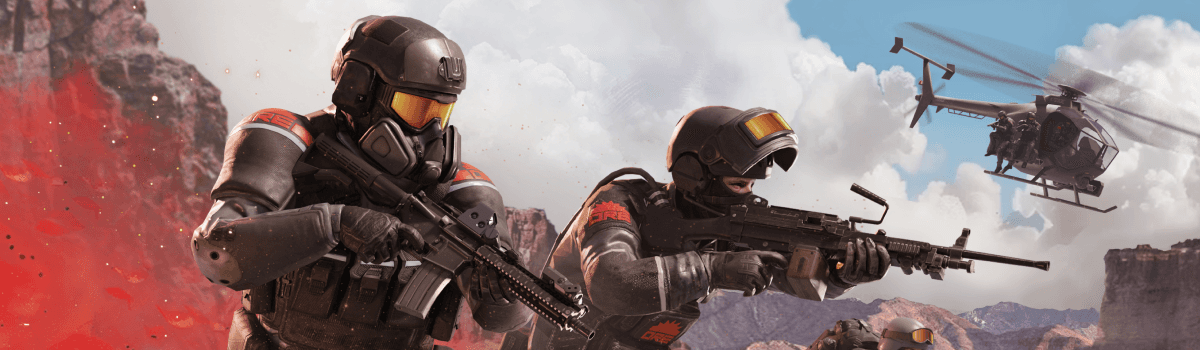
Forefront is their most ambitious project to date. A massive 32-player VR warfare experience with cross-play across platforms, a variety of expansive maps, semi-destructible environments, and a full suite of land, sea, and air vehicles. Players choose from four classes, each with specialized progression, and fight across environments where strategy, teamwork, and firepower all matter. The scope of the game is significant for any studio. For a lean team like Triangle Factory, delivering it without a large backend department required choosing infrastructure carefully.
The Challenge
Large-scale VR multiplayer is unforgiving. The immersive nature of VR means players feel latency and performance issues more acutely than in traditional flat games. A bullet that doesn't register in a standard shooter is frustrating. In VR, it breaks the experience entirely.
Forefront compounds this with its scale. Thirty-two players, vehicles, destructible environments, and cross-platform play across Quest, PICO and SteamVR headsets introduce significant networking complexity. CPU performance matters, a lot. Triangle Factory observed that server performance varied depending on the underlying hardware, with 3 GHz machines delivering meaningfully better results than 2 GHz equivalents.
Triangle Factory's CTO, Pieter Vantorre, was driving integration himself. For a small team, every hour spent navigating infrastructure is an hour taken away from building the game. As such, they needed both a migration path with easy integration, and a platform that would save them time.
Cost transparency was equally important. Unpredictable billing makes it difficult to plan and scale a game with confidence. The team needed to know exactly what they were paying for.
The Solution
Forefront launched in Early Access in November 2025. The team migrated to Edgegap during that period, starting with an initial 36-hour test with Forefront where it deployed 100% of its game server deployments to Edgegap to validate stability and performance, and then committed to a full migration.
The game's official “1.0” release launched on Edgegap in April 2026. By then, the platform had already proven itself in production.
Compute performance that met VR's demands
The technical validation was empirical. Triangle Factory tested Forefront on Edgegap's compute-optimized 3 GHz servers and confirmed the performance improvement directly. The CPU throttling issues that had surfaced previously were resolved. This was the condition that needed to be met before any migration commitment, and it was met.
Patented server placement for cross-play at scale
Edgegap's orchestration uses a patented decision-making system to deploy each game server at the optimal location for all players in a match. For a game like Forefront, where a single 32-player session can include players from multiple regions across different headset platforms, server placement is key to ensure player’s experience in every session; a balancing act between latency mitigation and fairness.
Edgegap's regionless edge network is available worldwide at a single universal price. Triangle Factory ensured global coverage without having to choose between reach and cost.
A self-serve platform that empowers dev team size rather than slow them down
No waiting on a vendor to configure environments. Triangle Factory could spin up, test, and iterate independently through Edgegap's self-serve portal. When questions came up, the teams communicated directly through a shared Slack channel, with fast, human answers.
As Pieter Vantorre, CTO at Triangle Factory, described:
"Simple to use and polished interface. A handy self-serve portal. No need to wait for the vendor to finish setting things up."
Transparent, usage-based pricing
Edgegap's pricing model is built around a single universal price across all its locations, charged on actual compute usage. No idle capacity costs, no regional pricing tiers. Triangle Factory knew exactly what they were running and what it cost.
An improvement that players noticed
Triangle Factory's community responded. Across the studio's games, players spotted the difference in server quality without any announcement from the team. From their Discord:
"why are the new breachers servers so flipping good" – Discord user

"these new servers are fire bro keep it up" – another Discord user
Conclusion
Triangle Factory wanted to ensure the ideal online experience for their players. They tested, validated, migrated, and watched the game run in production through Early Access before committing to Edgegap’s game server orchestration with their “1.0” launch.
For a small studio building at the edge of what VR multiplayer can do, that kind of infrastructure confidence matters. The team could focus on the game because the backend was handled.
As Pieter Vantorre puts it:
"Migrating to Edgegap was the right decision. We had fast turnaround times on any issues that came up during the migration, and Edgegap's team always replied with honesty and transparency. Together we worked out some difficult server CPU problems. After that, switching to Edgegap became easy and fun."